
About me
Kia ora, ko Rebecca taku ingoa.
I'm an Occupational Therapist/Kaiwhakaora Ngangahau with lived experience of neurodivergence and chronic illness. I live in Golden Bay/Mohua, with my dog (Octavia) and husband.
While managing my own health, wellbeing and sensory needs over the years I have learned many things about myself, what works for me, what doesn’t, and the kinds of supports I need to engage in the activities I want to do. It is an ongoing balancing act and can be frustrating and disheartening at times, but life can also hold so much meaning and joy when you really actively choose what is important to you and where you want to expend your energy.
I firmly believe in the power of meaningful occupations to improve people's lives. Using my lived experience and occupational therapy skills, I want to support other neurodivergent people with chronic illnesses to engage in the things they want and need to do. I believe it's also important to learn more about the beautifully unique ways in which we interact with the world, recognising our strengths and what we have to offer as well as figuring out, and doing something about, the areas in which we might need support or accommodations.
I'm here to help you work through the hard stuff as well as find the moments of joy and celebrate the big and little wins. Let's find ways to build your resilience and strength, while balancing it with self-compassion and rest.
Why work with me?
I bring a unique perspective to this work, being both a qualified health professional and a person with lived experience of chronic illness and neurodivergence.
I am non-judgemental, compassionate and supportive, and understand the complexity of living with and managing multiple conditions while also trying to engage in the things you enjoy and earn a living!
I am truly passionate about supporting other people to improve their wellbeing and live meaningful lives, while also holding space for the tough stuff that comes up.
My approaches & areas of interest
Strengths-based, person-centred, recovery oriented, neurodivergence-affirming and trauma-informed practice with a focus on:
Lived-experience informed supervision and mentoring
Identity exploration and neurodivergence, building self-understanding and self-advocacy
Exploring values, goals, interests, habits, roles and routines
Supporting sensory modulation, emotion regulation and executive functioning
Nature connection, different kinds of rest, mindfulness and self-compassion
Building a life worth living through engagement in meaningful occupations (occupation being any way you spend your time)
Chronic illness self-management and building self-efficacy, including the complex intersectionality of neurodivergence and chronic illness.

My Core Values
community · collaboration · connection

My Qualifications & Experience
In addition to lived experience of neurodivergence and chronic illness, I have an undergraduate degree in Psychology and a graduate Masters of Occupational Therapy. I was a disability support worker for many years before becoming an occupational therapist. I have also facilitated peer support groups, provided mentoring and supervision to disability support workers and other health professionals, and worked as a DBT Coach, DBT skills teacher and care coordinator in a residential mental health setting.
I have a Postgraduate Certificate in Mental Health and Addictions and am a lover of lifelong learning and do lots of continuing professional development and reading in the areas of chronic illness and pain management, sensory processing, neurodivergence and neurodiversity affirming practice, ACT, recovery approaches, trauma, nervous system regulation and somatics. I have recently completed training in supervision and am looking forward to using my OT skills in a different way and following my passion in supporting other health professionals.
My Hobbies & Interests
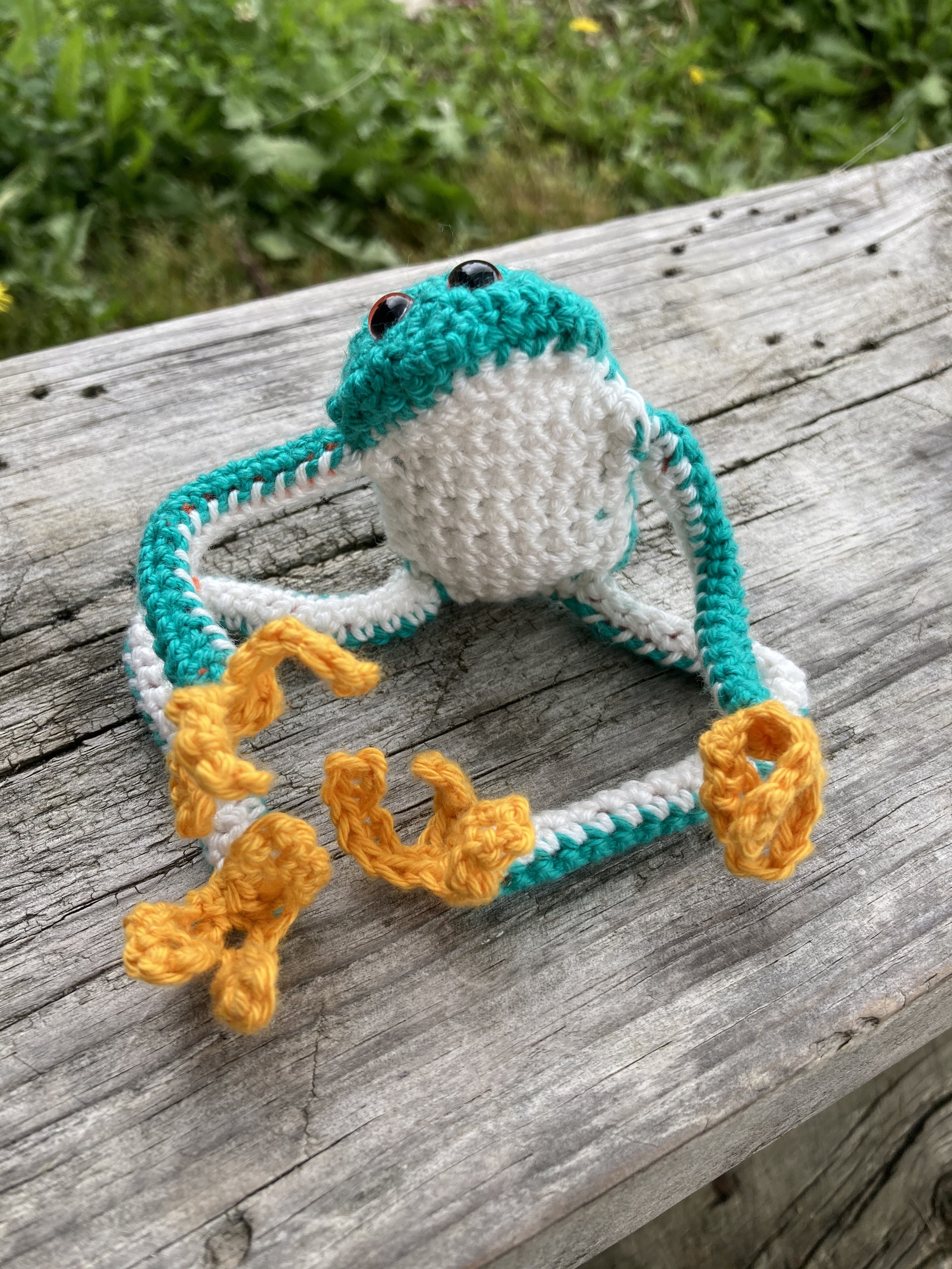
Board games, D&D, any of the LEGO video games, books (especially fantasy and historical fiction), dogs, gentle nature walks, gardening, allergy friendly baking, making DIY cleaning and body products, crochet and cross stitch, singing (especially Disney and musicals).
So what is occupational therapy?
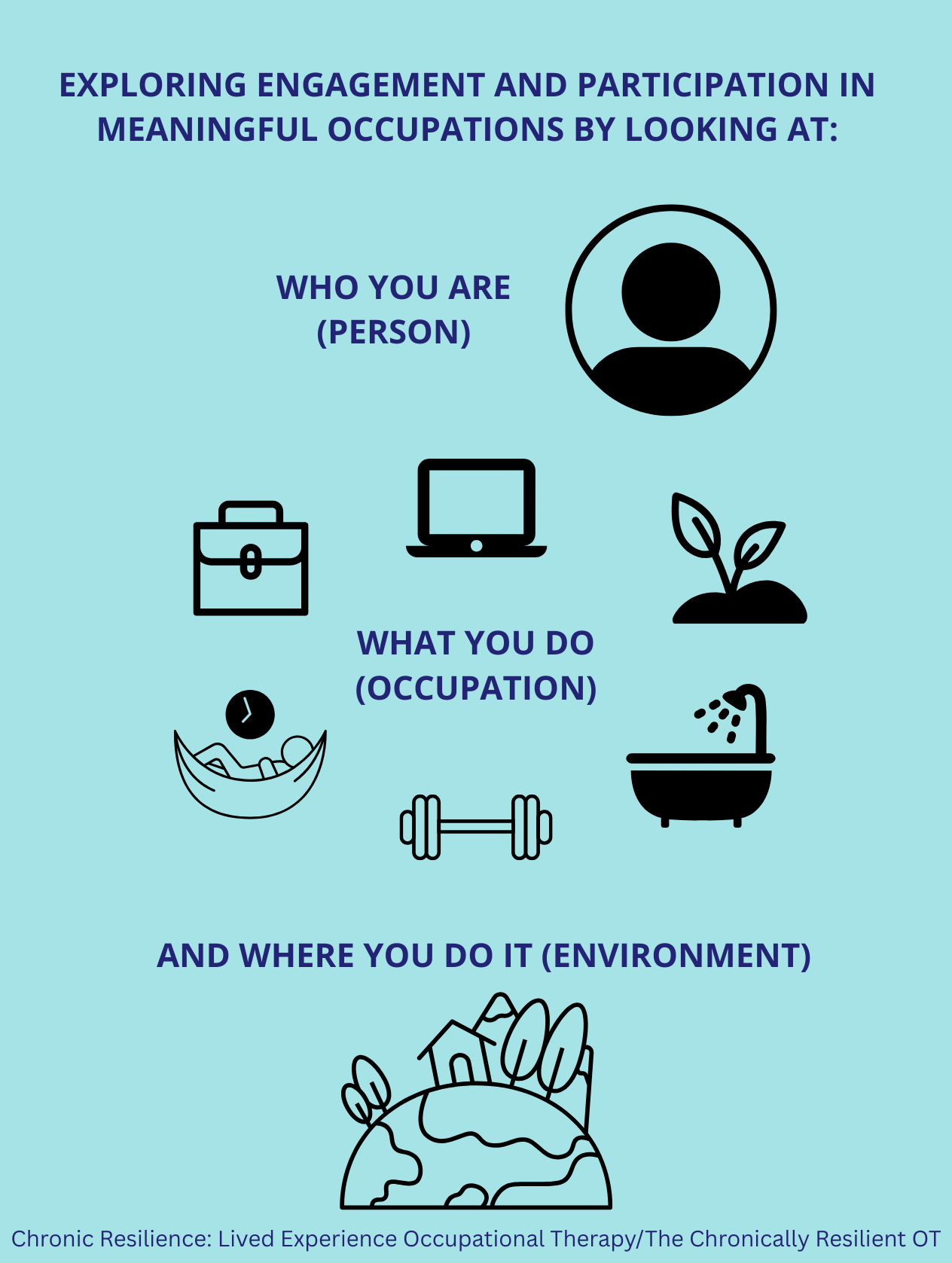
An Occupational Therapist works “with people and communities to enhance their ability to engage in the occupations they want to, need to, or are expected to do, or by modifying the occupation or the environment to better support their occupational engagement” (WFOT 2012). Occupation refers to any way a person occupies their time and can be broken down into the categories of self-care, productivity and leisure. People’s participation in occupations can be impacted by factors within themselves (e.g. mental illness, chronic pain), the occupation itself (e.g. too difficult, not accessible) and in the environment (e.g. funding schemes, physical environment) and an Occupational Therapist can provide support in all of these areas (Polatajko HJ, Townsend EA, Craik J, 2007).
The Maori Language Commission has translated occupational therapy as: whakaora ngangahau. “Whakaora means to restore to health and ngangahau is an adjective meaning – active, spirited, zealous… conveying the idea of reawakening, or restoring to health one’s activeness, spiritedness and zeal (Occupational Therapy New Zealand, OTNZ, n.d). Occupational Therapy is all about supporting people to participate in meaningful activity and working with them to identify strengths and overcome any barriers to engagement.
My approach is based on a combination of lived experience supporting and managing my own neurodivergence and chronic illnesses, as well as my background as an Occupational Therapist/Whakaora Ngangahau. For me, occupational therapy is all about enhancing wellbeing by supporting people to incorporate meaningful activity (occupations) into their lives and being able to participate in the things they want and need to do, building on their strengths and finding ways to reduce any barriers by developing the individual's skills, modifying the occupation or adapting the environment. We will do this by collaboratively setting and working towards goals that align with your values, interests and beliefs, remembering that it's not always about doing, sometimes it is also about being, slowing down and finding rest and restoration. This is especially true when supporting supervisees; as health professionals we cannot pour from an empty cup and often need to adapt the environment and what we do, to be able to continue doing the things we love.
Services & Resources
Drawing from years of professional expertise combined with lived experience, Chronic Resilience OT is focused on supporting other health professionals through supervision, mentoring, consultation and training, with a focus on wellbeing, environmental supports, self-understanding, self-management and meaningful activity.

Supervision & Mentoring
Working with neurodivergent and/or chronically ill occupational therapists in New Zealand & Australia, I offer formal and informal supports as someone who understands.
Professional Consulting
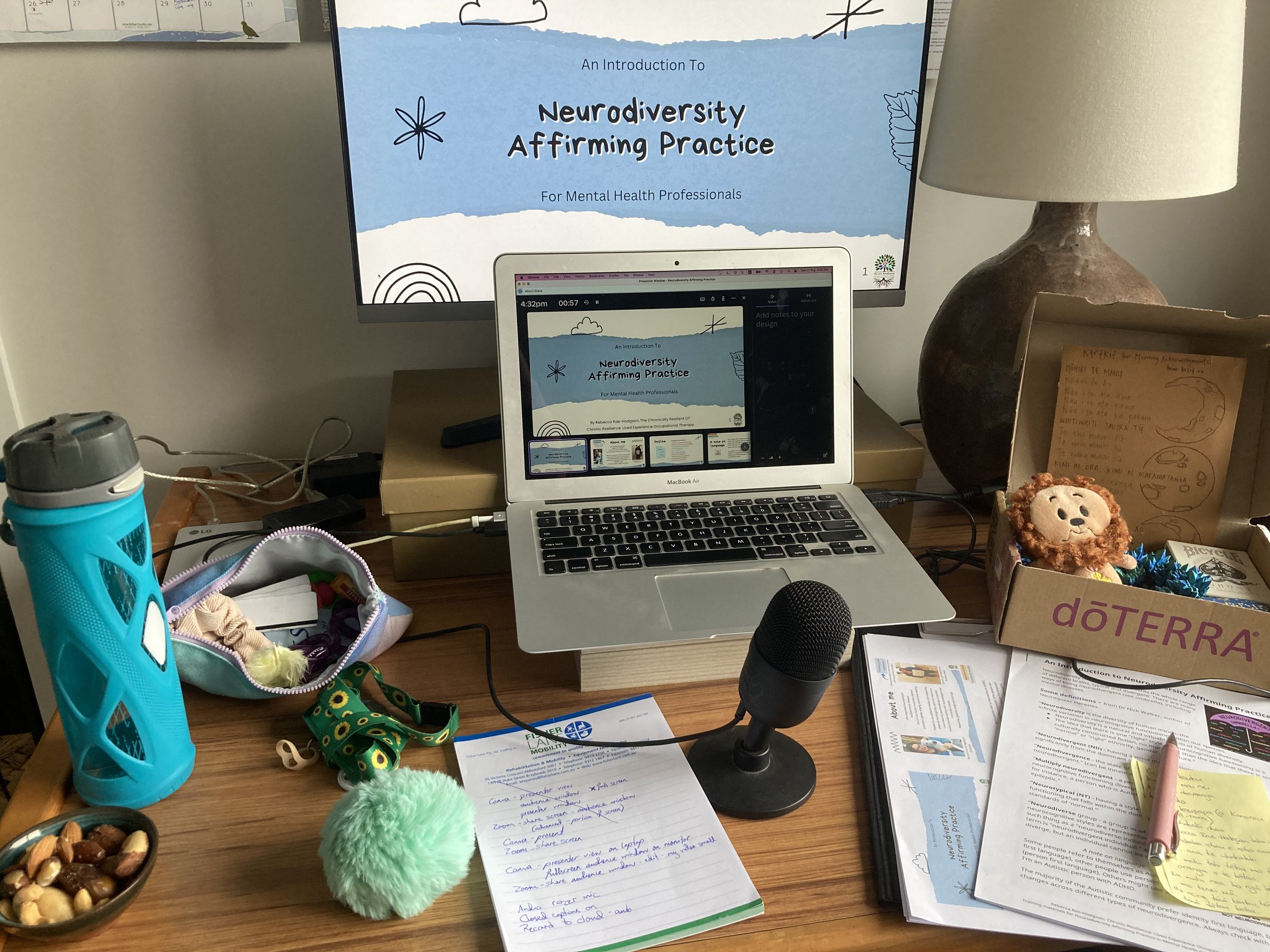
Consultations are available for any discipline or service on matters relating to chronic illness, sensory processing, mental health or other neurodivergence.

Workshops & Trainings
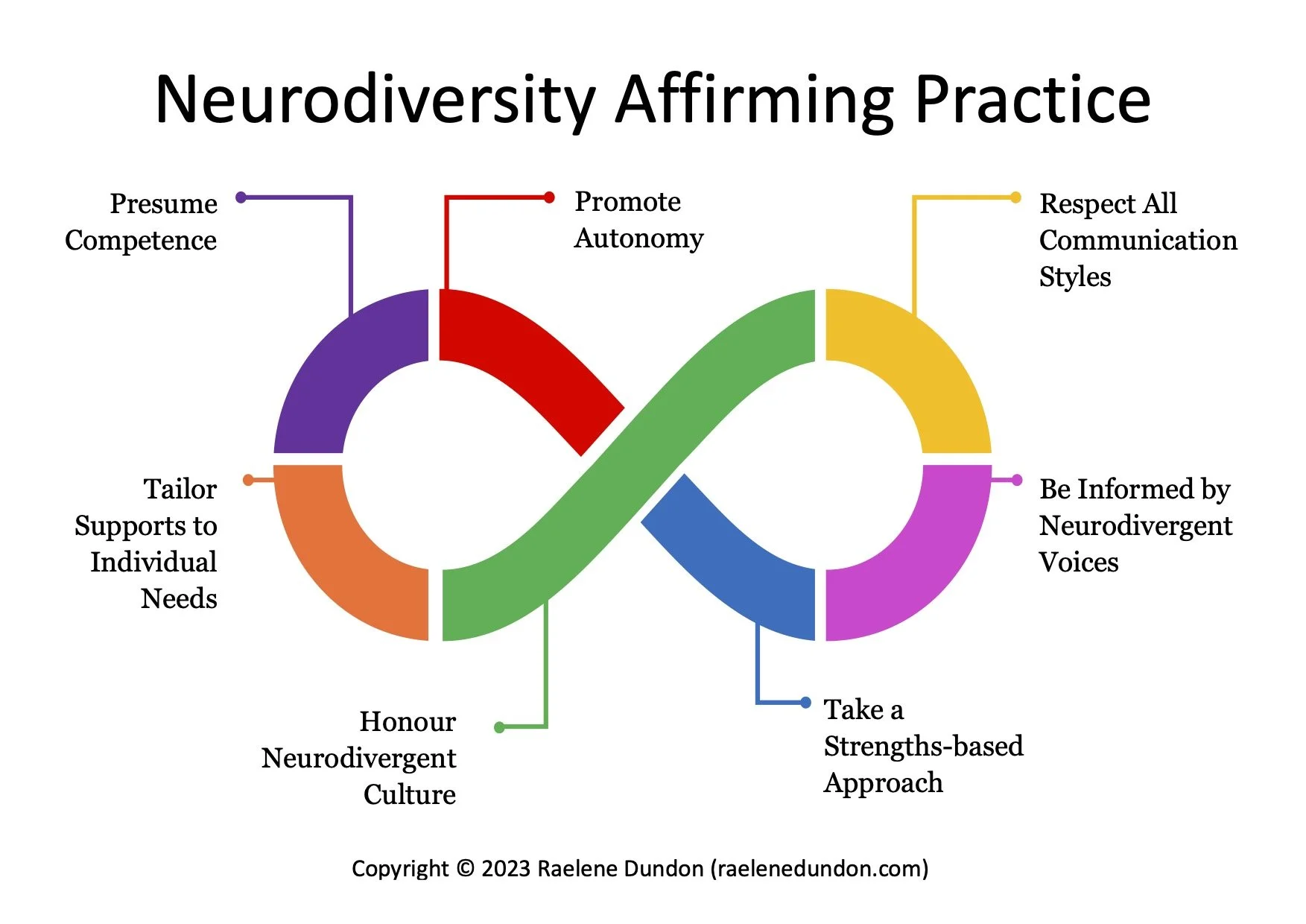
Online and in-person trainings on Neurodiversity Affirming Practice for Mental Health, Sensory Processing in Mental Health, and Values Exploration.
On-Demand Trainings
Access some of my past trainings, on-demand, at your own speed and in your own time.

My Writings & Musings
Find my thoughts on a variety of topics, such as neurodiversity-affirming practice, how we can support ourselves as neurodivergent OTs, book reviews, and more!
Downloadable Resources
A range of worksheets and graphics on topics such as self-care, chronic illness, and mental health, written from a lived experience and occupational therapy perspective.